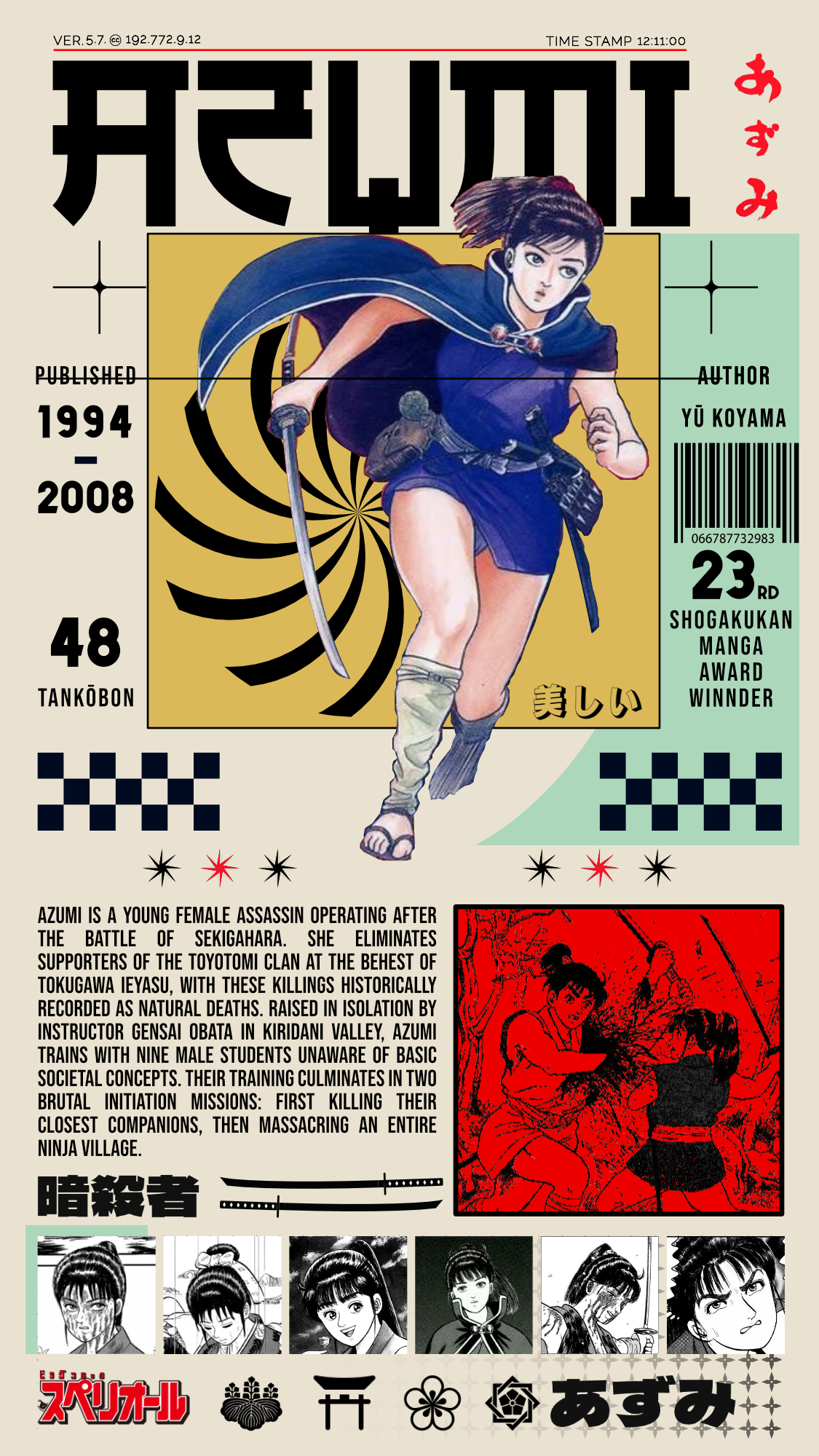
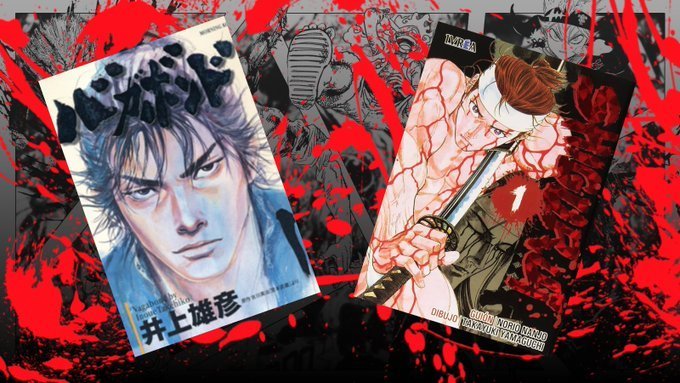
I just finished Azumi, and honestly… what can I even say? I think it’s up there with Vagabond and Shigurui. Shocking? Maybe. But not if you’ve actually read it and I hope you do after this azumi manga review convinces you to read it.
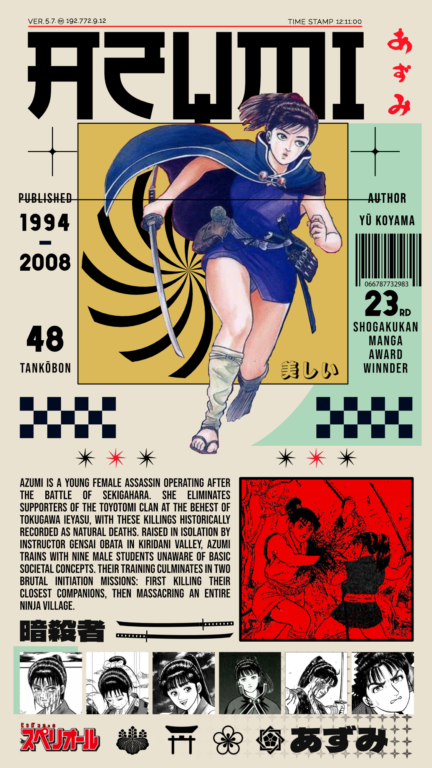
I was looking for something new after finishing Ruler of the Land, a manhwa from the 80s that feels way more influenced by old-school manga than most manhwa today. The story hits a similar vibe to Vagabond: that same pitch, tone, and theme. A lone samurai… or in this case, an assassin, driven by dreams, honour, and most importantly, a sense of giri.
So what’s giri? Basically, it’s the Japanese idea of duty and obligation. And all the stories I’ve mentioned have some version of it running through them. It feels almost baked into Japanese culture — especially in older time periods — and yeah, it makes for incredible stories and even better main characters.
Like Miyamoto Musashi in Vagabond, Fujiki Gennosuke in Shigurui, and now Azumi in Azumi.
What I’m saying is: different art styles, different stories… but they’re all amazing reads and 100% worth your time, especially if you’re into Japanese period pieces.
Azumi Manga Review: Beauty, Identity, and a Life Built on Killing
Azumi is about a young assassin who’s raised in this really messed-up version of “right and wrong,” where everything is justified by the idea of the greater good. She gets sent on missions to kill high-ranking daimyō, samurai, and basically anyone who ends up on the list.
Azumi is also extremely beautiful, and that constantly makes people underestimate her friends and enemies alike. On the surface, the story leans heavily into Japanese culture and rituals, and it keeps asking this question: where does an assassin fit into a society built on honour and tradition?
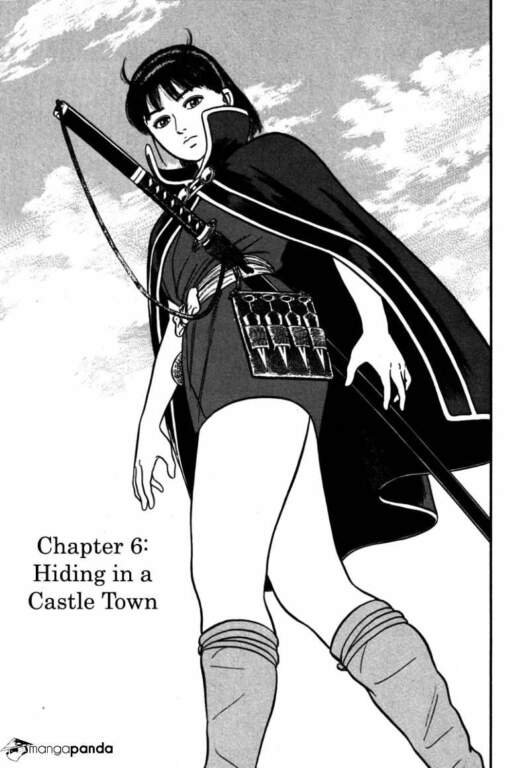
But underneath that, the side stories go deeper. You get a lot more about friendship, love, beauty, identity, and Azumi slowly drifting into womanhood, even while living a life that doesn’t really allow it.
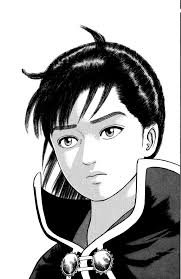
The story does have a repetitive format, and I can see how some people might get tired of it over time. But for me, the changing locations, the constant rotation of characters, and the different situations kept it fresh.
I was flipping pages like mad. And nobody is safe, you’re always wondering who’s going to die next. Most arcs ramp up in a pretty clear way: they start slow, build tension, and usually pay off without needing massive twists. That said, when a twist does hit, it’s actually really fun because you’re not expecting it.
Even when the main tone shifts, action, brutality, politics, chaos, the emotional undercurrent stays the same. Love, beauty, affection, and loneliness run through the whole series, and that’s what pulls you closer to the human side of this “perfect” assassin.
Azumi Manga Review: Characters, Relationships, and Azumi Growing Up
There aren’t many characters in Azumi that stick around for long and i while warn you before you finish this azumi manga review that the moment you get attached to someone, you’re usually forced to say goodbye and move on to the next.
I don’t want to go too deep into specific characters because it would ruin a lot of the growth and the journey, so I’ll keep it simple and give a basic overview.
Azumi, the main character, ends up surrounded by friends, fans, and crushes — even while doing work that’s insanely dangerous. And obviously, that kind of life messes with relationships. On top of that, the people with real power above her are always trying to use her skills for their own goals.
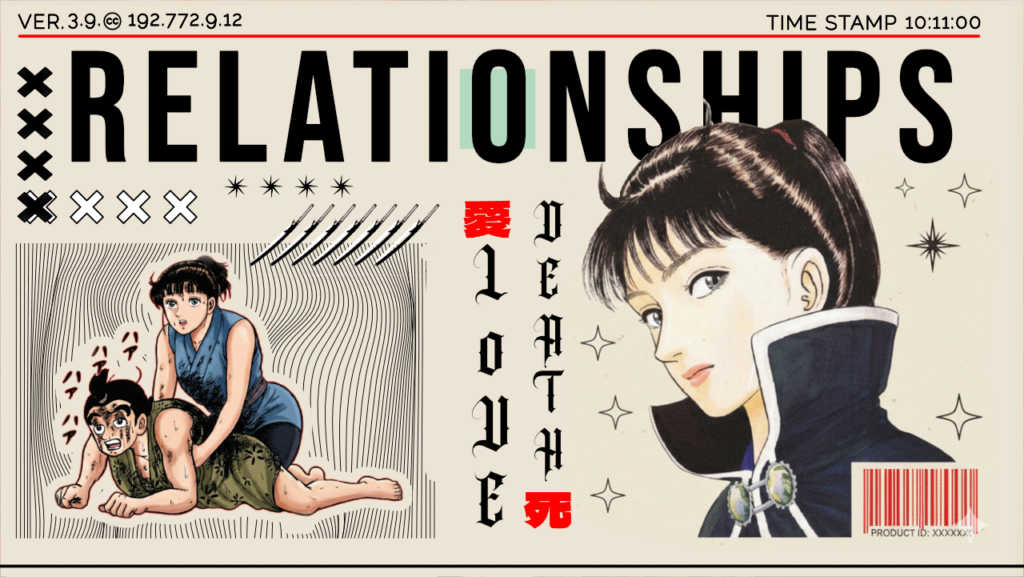
Front and centre, this is a story about Azumi growing up. She starts out as a young, naïve girl and slowly becomes a woman. The beliefs she begins with — simple, almost idealistic — don’t survive untouched. As she gets older, what she experiences twists what she thought she knew was true, and she starts struggling with bigger questions: what is the right thing, who is she really, and is any of this actually for the greater good?
Her relationships with men can be dangerous and upsetting, but it never takes away her ability to bond with people or feel compassion — for men, women, and children alike.
This isn’t really a story about revenge.
It’s a story about duty.
Azumi Manga Review: Old-School Artwork With Surprisingly Strong Atmosphere
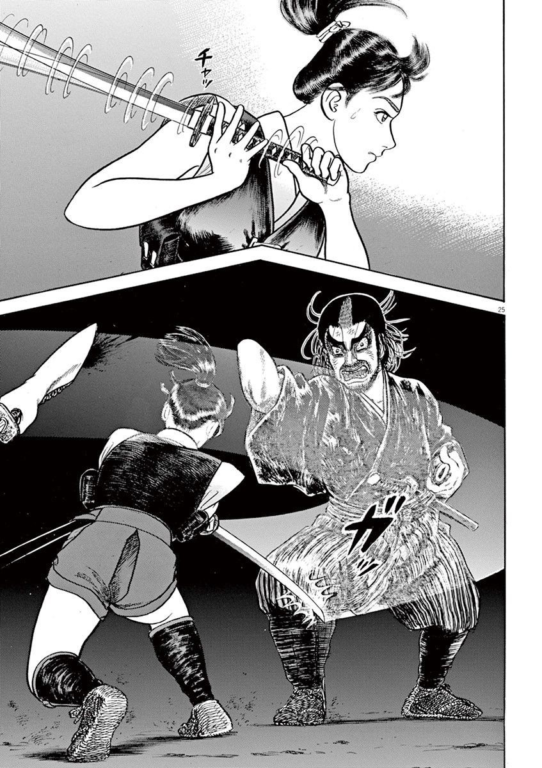
At first glance, Azumi has a pretty simple, almost childish-looking art style that leans more into older manga than the “modern” look even for its time. And yeah, I can see how that might put some people off, especially if you’re coming straight from Vagabond or Lone Wolf and Cub.
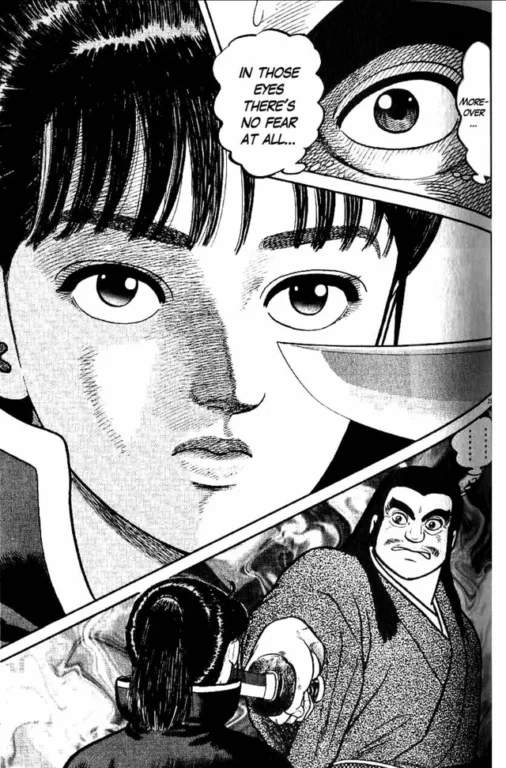
The characters are drawn with less detail in the face, or maybe it’s better to say they just don’t have that “traditional” manga look a lot of Western readers picture in their heads. All the basics are there, it’s still clearly manga, it’s just not that hyper-stylised style we’re used to now. And it makes total sense when you remember it first started in 1994.
But even if the characters look simpler, the character designs, backgrounds, patterns, and textures add a ton of depth. The world feels lived-in, and it pulls you deeper into the story the longer you read.
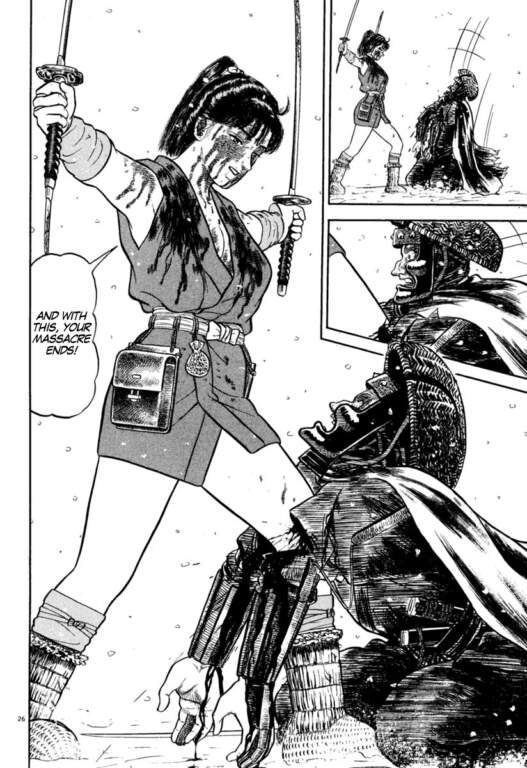
And honestly, that simple style does something really clever, it lulls you into a false sense of safety. Like everything’s going to be straightforward and easy. So when the story suddenly hits you with a more serious, brutal tone, it actually shocks you. The visuals and the subject don’t match at first, and that contrast makes the darker moments hit even harder.
Azumi Manga Review: The Emotional Undertone Behind the Assassinations
The tone and atmosphere shift depending on what’s happening in the plot — well, duh — but the underlying tone from Azumi herself doesn’t really change that much. It dips in and out, then slowly builds over time, kind of like a frog in boiling water.
The thing is, it never really gets properly answered. Azumi questions why she’s an assassin, she doubts it, she even stops for a while… but she always ends up right back where she started. She doesn’t really show remorse for killing, and she never fully gets to grow through love or connection — even when the author drops hints that she might.
That said, the story does touch on what it means to be a woman, and what’s expected of a woman — especially a beautiful one. There are small moments that hint at real female growth, and it even shows Azumi dealing with her period while still carrying out assassinations. But then it quickly snaps back into business as usual: killing, missions, and just how ridiculously good she is at it. And again… it never really lands on a clear conclusion by the end.
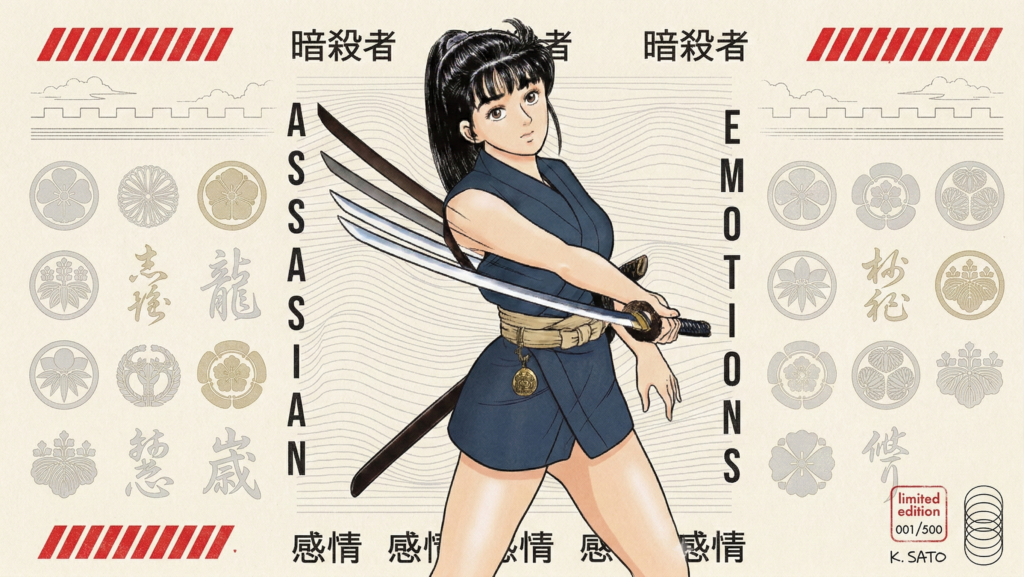
And yeah, the story is full of killing — it’s literally about an assassin — but it’s also about a young woman trying to figure out who she is. Part of that is family and connection, and another part is romance.
Throughout the story, Azumi is like a flame to moths — the moths being boys and men who fall for her charm. And Azumi does fall for some of them too, but it’s usually more about connection than sex. Early on she’s naïve, but by the end she’s much more aware of what’s going on. She doesn’t really chase sex and she rejects most advances, only giving in when she feels there’s a real bond… which is almost a curse, because the people she cares about often end up dead.
So while the main plot is assassination and politics, the undertone is always about connection, commitment, and what it costs her.
Azumi Manga Review: Story Structure, Pacing, and the Episodic Arcs
Azumi doesn’t flow like climbing a hill. You don’t start at the bottom and slowly work your way up to one massive peak where everything comes together for a huge final send-off. It’s more like a rollercoaster.
The arcs are shorter and more episodic, kind of like 90s TV, where you’d get a full story in one episode. Now, I’m not saying there’s no overarching plot, because there is… but it doesn’t feel like the main point. The bigger plot isn’t as important as the individual stories, or Azumi’s personal journey of growing up and trying to figure out who she actually is.
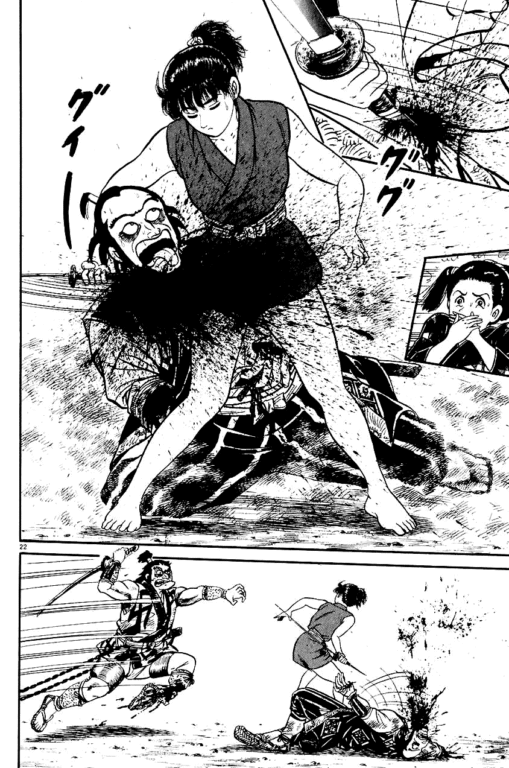
Some of the stories can feel a bit similar on paper, Azumi gets sent to kill someone, but the characters introduced in each section make up for it. Some people you end up really caring about, and others you’ll absolutely hate.
And the stories themselves are pretty straightforward. You don’t need to be reading at some high level to enjoy Azumi. If you can handle a bit of blood, a bit of nudity, and some sex, you’ll probably have a good time with it.
My only real negative is the ending. The flow of the story just kind of… stops. It feels like it was cut short, like the author (or the editors) ended it earlier than planned. Maybe sales dropped and it got wrapped up faster than it should’ve, I don’t know, but it’s disappointing because it doesn’t feel like a proper full stop to me.
Azumi Manga Review: Should You Read It? The Best Fit Audience
If you’re a fan of battle shonen, then Azumi is for you. If you like historical manga, Azumi is for you (with a few caveats). If you’re into political drama, Azumi is for you. And if you like manga with adult content, blood and guts, skin and sex, then yeah… Azumi is for you.
Like I said earlier, if you’re looking for something in the lane of Lone Wolf and Cub, Vagabond, or even Shigurui, then this is a must-read and should be on your list.
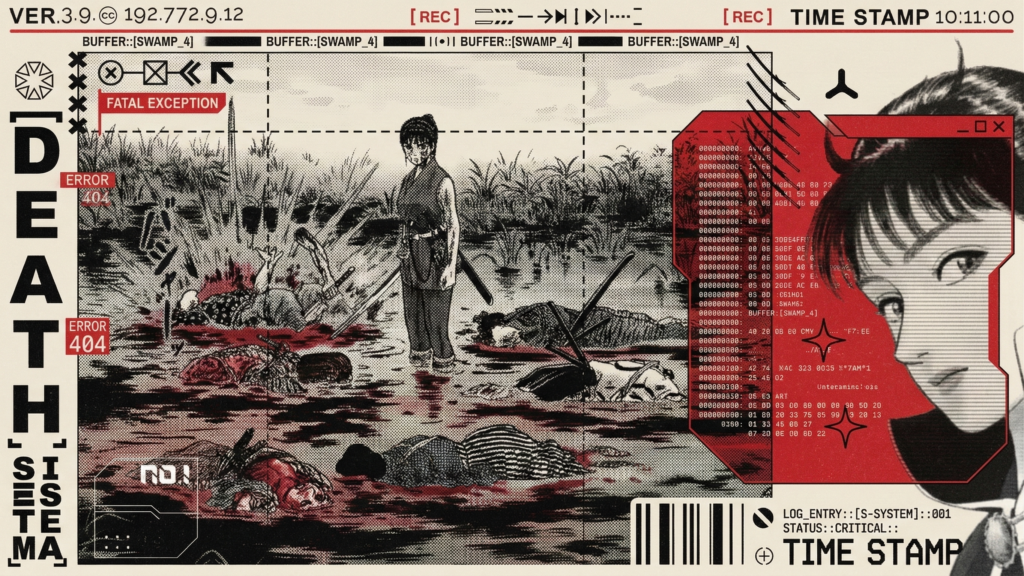
Azumi is a well-written manga that most readers can enjoy. It’s a simple core story, but it’s wrapped in arcs that add real depth. If I had to pin down the target audience, it feels like it’s aimed more at teens and men, but honestly, because it’s a female protagonist and the story actually digs into the problems that come with that, I think a lot of women will connect with parts of it in a way most men probably won’t.
I’ve talked a lot about Azumi, the story, the vibe, and how I took it, but let’s get into some actual facts for anyone who’s still umming and ahhing about picking it up.
Azumi Manga Review: Plot, Raised to Kill, Sent to Erase Toyotomi Loyalists
Azumi is a teenage assassin living in the aftermath of the Battle of Sekigahara. She’s basically used as Tokugawa Ieyasu’s hidden weapon, quietly taking out anyone still tied to the Toyotomi cause — the kind of kills that later get brushed off as “natural” deaths.
She doesn’t come from normal society at all. Azumi is raised deep in the Kiridani valley by her harsh teacher, Gensai Obata, training alongside nine boys who are so sheltered they barely understand how the real world even works. Before they’re allowed to go out on missions, they’re put through two nightmare trials: first, each student has to kill the person they’re closest to (Azumi is forced to kill Nachi), and then they take part in the slaughter of an entire ninja village.
Only five make it through.
From there, Azumi carries out mission after mission, and her path starts crossing with “bandits” who turn out to be former samurai — men made desperate by Tokugawa policies. And what really sets Azumi apart isn’t just her skill, it’s how well she endures and adapts, even when everyone around her is being driven by one simple obsession.
Azumi Manga Review: Series Info, Creator, Run Dates, and Volume Count
Azumi is a manga created by Yū Koyama, who both wrote and illustrated the series. It originally ran in Shogakukan’s seinen magazine Big Comic Superior from 1994 to 2008, and was later collected into 48 tankōbon volumes.
It was also properly recognised in Japan, winning an Excellence Prize at the 1997 Japan Media Arts Festival, and taking the 43rd Shogakukan Manga Award (general category) in 1998.
Azumi Manga Review: About the Creator Yū Koyama
Yū Koyama is a Japanese manga artist, born on 20 February 1948 in Ogasa, Shizuoka.
After finishing Shizuoka Prefectural Shimada Commercial High School, he moved to Tokyo and started working in 1968 at Saito Productions, the studio run by Takao Saitō. In 1971, he also worked with Kazuo Koike at Studio Ship.
Koyama made his pro debut in 1973 in Shōnen Sunday with Ore wa Chokkaku.

Across his career, he’s worked on loads of series, sometimes as the main creator, sometimes just doing the art, and sometimes helping out in the background. Some of his best-known titles include Ore wa Chokkaku, Ganbare Genki, O~i! Ryoma, Change, Sprinter, Ai ga Yuku, Azumi, Momotaro, Kaze no Saburo, Samurai Kazuma, Harajuku Story, and Iza! Ryoma.

He’s also won some big awards, including the Shogakukan Manga Award twice — first in 1977 for Ganbare Genki, and again in 1998 for Azumi. And Azumi also picked up an Excellence Award at the 1997 Japan Media Arts Festival.
Azumi Manga Review: Beyond the Manga — Movies, PS2 Game, and More
Azumi didn’t just stay as a manga, it’s been adapted into a bunch of other stuff too.
It got a live-action film in 2003, directed by Ryuhei Kitamura, and then a sequel followed in 2005 called Azumi 2: Death or Love, directed by Shusuke Kaneko.

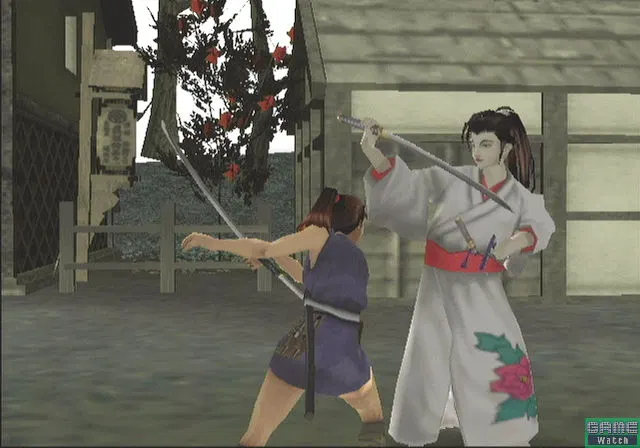
It also jumped into games with a PlayStation 2 action game in 2005, based on the manga’s story. That one was Japan-only, and it later got re-released as part of the cheaper Simple series budget line.
On top of that, Azumi even became a stage play, which premiered in April 2005, with Meisa Kuroki playing Azumi.
And yeah, there’s been official merch too — including a film soundtrack released in 2003, and a line of manga-version figures that came out in 2006.
Azumi Manga Review: Final Thoughts
So if you’ve been on the fence, this is your sign to just give Azumi a shot. It’s one of those series that looks simple at first, then slowly pulls you deeper the longer you stick with it — brutal action, strong historical atmosphere, and a main character you end up thinking about long after you’ve closed the book. Even with an ending that doesn’t feel like a perfect full stop, the journey is absolutely worth it. If you do pick it up, let me know what you think — and who your favourite character was… assuming they survived long enough for you to get attached.
Loved this? If you enjoyed our Azumi manga review, you definitely need to check out our Shigurui manga review. It’s graphically violent, dark, and deals with heavy, mature themes, offering a stark and unflinching look at the harsh reality of a samurai’s way of life. If you loved Azumi, then Shigurui is absolutely for you.










Leave a Comment