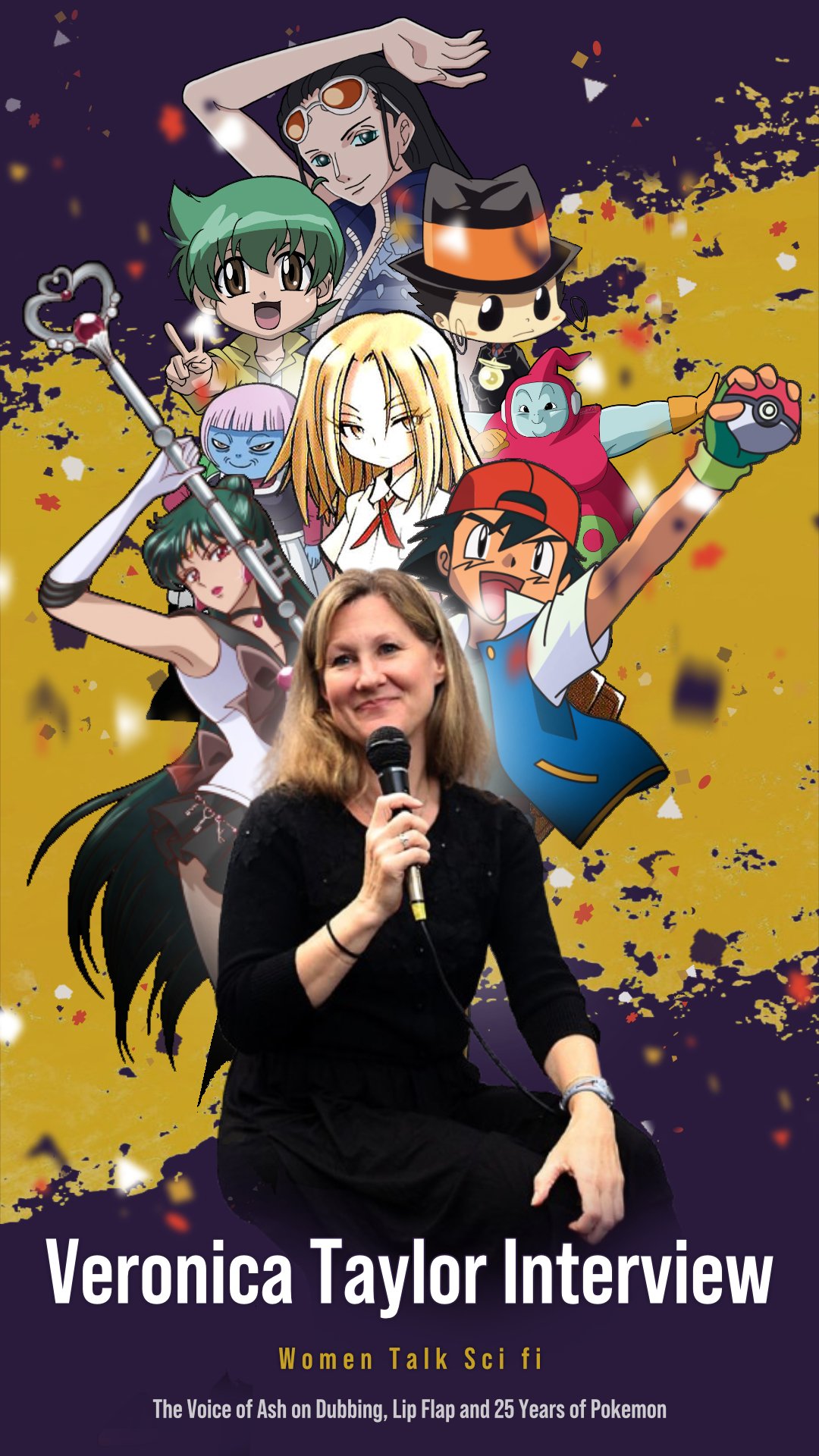
For eight seasons and 417 episodes, Veronica Taylor was the voice of Ash Ketchum. If you grew up watching the English dub of Pokémon between 1998 and 2006 like i did and yes i am old now, then every “I choose you!”, came from her performance, brought to life over animation that had already been created, timed, and voiced in Japanese.
Dubbing anime isn’t as simple as reading a script. Every line has to fit animation that’s already finished. The mouth movements are locked in, the timing is set, and the script has already gone through multiple rounds of translation and adaptation. The challenge is making natural English dialogue fit Japanese lip movements without losing the emotion behind the scene.
In this Veronica Taylor Interview she explains that dubbing and prelay are “different muscles.” In prelay, the voices are recorded first and the animation is created afterwards. With dubbing, it’s the complete opposite.
She talks about matching lip flaps, discovering that Korean sentences often end with an open mouth sound that writers have to work around, and why so many young male anime protagonists are voiced by adult women. Cast a real young boy, and there’s a good chance his voice will change before the series is finished.
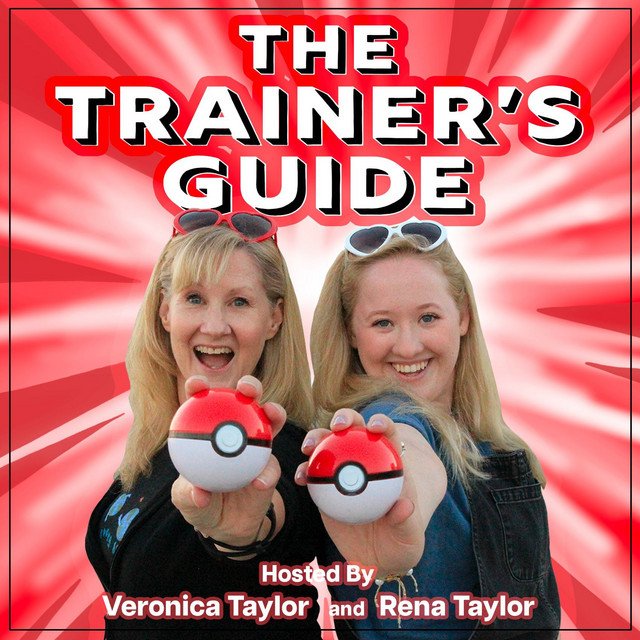
Joining her is her daughter, Rena Taylor, an illustrator who’s been part of the convention scene since she was four years old. In fact, she was in utero during the entire first season of Pokémon. Today, she co-hosts The Trainer’s Guide, a rewatch podcast where they revisit each episode, explore its message, and look at how those lessons still apply to everyday life.
It’s a fascinating conversation about the craft of voice acting, what 25 years in the industry does to your voice, and what it’s like working alongside family while still building your own identity. You can listen to the full interview or read the complete transcript below.
Thanks to women talk sci fi
Now, if you’re wondering why we’re hosting this interview on our site, well, it’s from my mum’s podcast, Women Talk Sci-Fi. If you’re interested in more interviews with your favourite actors, check out Women Talk Sci-Fi.
When her and I are at conventions, we’re lucky enough to interview lots of interesting people, and she’s collaborating with me to host some of those interviews here on ReadManga.cool. I’ve even convinced her to start an anime podcast with me.
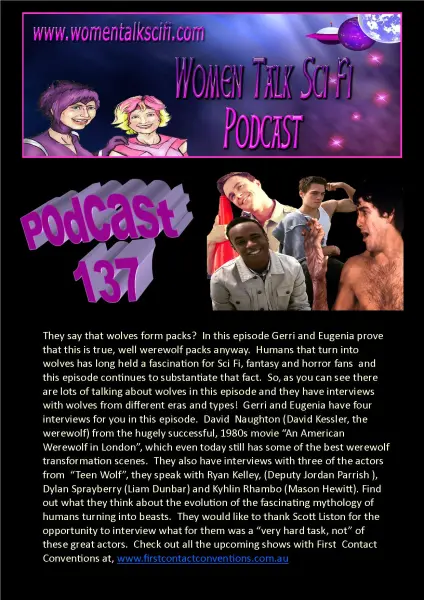
Listen To The Full Veronica Taylor Interview
Getting started: how the podcast came about
Eugenia (17:43): We’re just here for a conversation. I want to ask Rena, what did your mother have to do to persuade you to be on the podcast?
Rena: Oh, my gosh. Not much, actually.
Eugenia: So there was no bribe or anything involved?
Rena: Should there have been?
Veronica: Oh, yeah. Now you’re getting me thinking.
Rena: I don’t know. Maybe there will be for the second season.
Veronica: Yeah, we’ll see. She’s learning.
Rena (17:53): I think we started the podcast because, I’ve been coming to conventions with my mom since I was four, and people always come up to the table and share their stories of how the show impacted their lives, how meaningful it is to them. That was one of the things we wanted to do for the podcast: bring those stories to a greater audience. And I had never seen the first season of the show, because my mom was pregnant with me for the whole first season. I was born at the end of it.
Veronica (18:39): So she knew Ash’s lines, heard through the lining of my stomach, and that was it. Then we finally sat down and watched the episodes.
Rena (18:48): Yeah, it’s kind of fun. And the show itself is actually really great, so it’s been quite enjoyable to watch.
Eugenia (18:54): Had you been much of a Pokémon watcher before that, or because your mum was in it?
Rena (18:59): It was the only show I was allowed to watch in the morning.
Gerri: Did you have to acknowledge Mum?
Rena: Well, that’s the crazy thing, especially about Pokémon, even now it’s easy to remove yourself. I think for both of us. There are some things where you can hear your own voice, I hate hearing the sound of my voice, so sometimes you hear it and you think, oh, I wish I’d done that differently. But Pokémon is great because the voices are so different that you really can just watch it without thinking, oh wow, that’s my mom, or I know that person.
Growing up with a voice actor
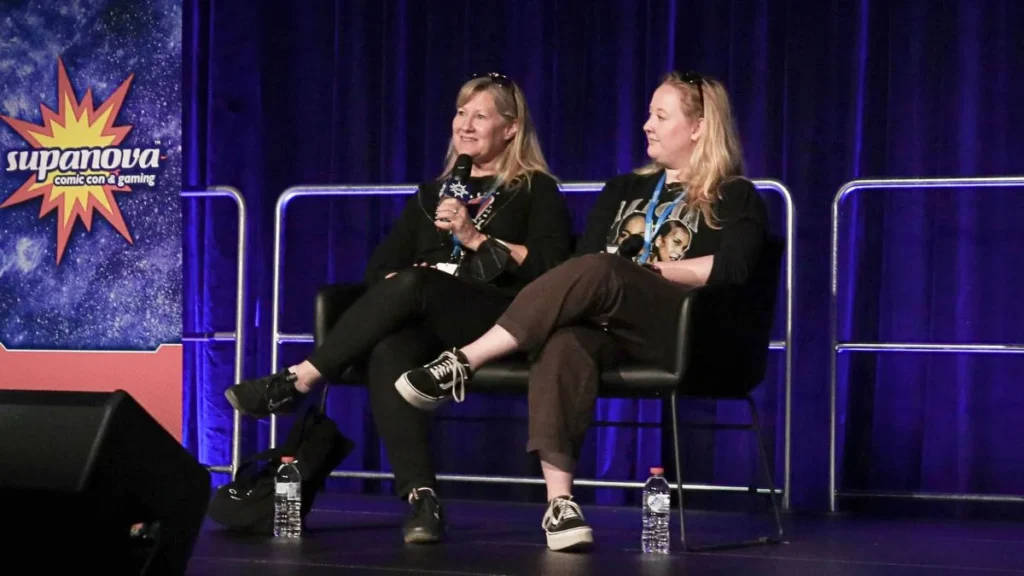
Gerri (19:34): Before we go on to asking Veronica questions, how was it growing up with someone who was so versatile with their voice? If you were naughty, was there a certain different type of character that would come out?
Rena (19:51): Oh, she just sounds very, very strict. Do you know what I mean?
Gerri (19:55): It’s a pity we don’t have film, because you should see Veronica’s face. Does a character come out?
Rena (20:05): I don’t think it’s a character.
Gerri: You don’t?
Rena: No. I don’t know, it’s strict-mom voice. She gets the strict, mom voice. Luckily I’ll say I’m pretty good, so I don’t get that much. But there is a thing when my mom is mad. It’s like the deep one.
Gerri (20:24): Because you’re well-versed, you can bring out that different character. Which brings me to — is that something you use in your real life? Your voice as a tool, as well as in your career?
Veronica (20:39): I would say probably yes, because you do have to temper what you say and how you say it depending on with whom you’re speaking. I certainly have a way of speaking to younger children, to gain their confidence. I have a way of speaking to people at the hotel when I would like them to do something, you know, when you’re trying to be super nice. Not that it’s fake, but there are different ways you use your voice depending on the situation.
Gerri: It’s interesting, because you build your life around different characters. Do you see yourself as different characters? And your inner voice as well?
Veronica: I don’t think so. Perhaps I don’t have an inner voice as much, because I’m using my outer voice so much. I do a lot of audiobooks, so I have many, many characters I’m thinking of while I’m working on a book, which can be three days of immersing yourself in that. I don’t talk to myself so much, but I do think a lot of people do.
Rena: I probably say too much out loud. I’m talking to myself right now, like, okay, we’re going to do this, okay, okay. But I never give myself that pep talk as much.
Gerri (22:08): Voice acting is different from acting, because you have to create your own world — in your head. I just wondered how that also was in real life.
Veronica (22:19): I think all of the skills I learned for theatre or TV, and it’s mostly theatre where you get your great base for acting, all of that comes into play for voice acting, even sitting and narrating a book.
Like you said, it’s in your head. You know what the body would be doing, but it comes out only in your voice, in what you’re saying and how you’re saying it. Skiing, you’re still kind of going down the hill, and you have an understanding of how you stick the poles in the ground and push.
Or as you’re running: I was trying to get here as fast as I could. You know what it feels like, because you’ve gone through it all. And then you just have it come out.
Why women voice young boys
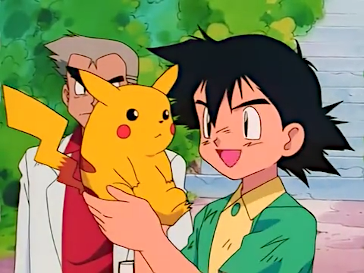
Eugenia (23:16): The interesting thing is that you’re the voice of Ash. And then we’ve got someone like Bart Simpson, who’s also a female voice. What is it about the female voice doing the young boy? Is that something that’s common?
Veronica (23:28): I think so, because you have a little bit more range. If you get younger boys to play younger boys, once their voices change… whereas the pre-pubescence is still in our voices. And a lot of men don’t transition into a higher or lighter voice that easily. So luckily, women can pop in and have a wider range in that sense.
Gerri (23:55): Our voices change as we age. Has yours changed over that time? Or because you’re a voice actor, can you maintain it?
Veronica (24:05): I feel like for the most part I’ve maintained it. I can still do roles that I did in, I don’t know, 1995, because some of those characters have come back. But probably with all the travelling that I do, I have more wear and tear on my voice than I used to.
We wear masks for conventions and in big groups, and even that little bit more projection to get through the mask has a wear on my voice. There’s a different sound that I have now that I didn’t have before. I wouldn’t say that’s age, I think it’s wear and tear.
The Trainer’s Guide podcast
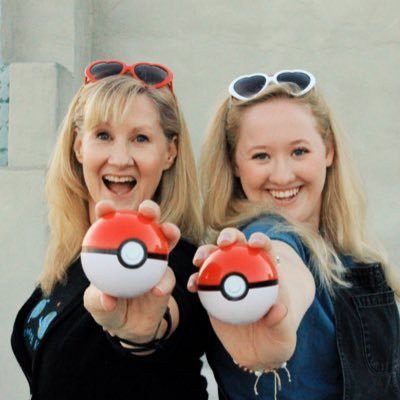
Eugenia (24:42): Tell us a bit more about the podcast and how it came about, because you have a love of Pokémon.
Veronica (24:51): We thought for a long time about doing a podcast, because of all the great stories that we hear. We kept saying, what can we work on that we can just share with people? I think we probably thought about it for maybe five years before we started.
Rena (25:03): I think it probably came out of the pandemic too — both of us being home and together, trying to figure out what to do next, how to make the most of it. And again, so many stories about how the show has helped people through really tough times, or “I met my partner because we both loved the show,” or “we met at a convention.”
Those personal stories motivated us. We thought, well, we could re-watch the episodes, and then at the end of each one we have people call in, send in voice recordings, or write in with their favourite memories, and we play that. Which I think is honestly the best part.
It’s so great. But the podcast itself is a re-watch of the first season of Pokémon at this moment. We do a short recap of each episode and then talk about the different lessons you can learn, and how you can apply that to being a better trainer in your real life.
Dubbing vs prelay: the craft
Veronica (25:58): I’ve never had one job. When I was working on Pokémon, I was also working on other things. And then I was also just pregnant. So you remember things in a different way.
Eugenia: So how do you compartmentalise when you’ve got multiple characters in one production?
Veronica: When you’re dubbing something, you do all of one character first and then all of the others, so it’s much easier to just stick in character.
When I’m doing an audiobook, or prelay, which is when you do a cartoon, voice first and then it’s animated later, you have to really envision the character as you’re doing the voice for it. Even in a book, I have my notes.
I’ve marked up the script or the text of the manuscript, and then I just tell the story and pop in and out of the voices. It’s easier to maybe not get all the way into a voice in an audiobook. It’s much easier to fully be a character when you’re doing it one at a time.
Eugenia (26:58): Is dubbing over the top of a cartoon harder than laying down a voice that the cartoon’s animated to later?
Veronica (27:06): I think it’s just different muscles, really. When you are dubbing, you are forced to fit the lip flap. So the script has to acknowledge the open mouth, the pauses, or just odd stuff that happens in there because it’s in another language.
We worked on Cubix, which was South Korean, and what I didn’t know before that was that in that language there’s an open-mouthed sound, usually at the end of a sentence. So a lot of things had to be tweaked a bit.
Gerri (27:36): So linguistically then, do you have to place a character in a particular language group to make that sound? Do you do research?
Veronica (27:47): No, you don’t research, because half the time you don’t even know. When I auditioned for Cubix, I didn’t know where it was from. I didn’t know anything about it until we started working on it.
Rena (28:00): But especially for dubbing, and for all cartoons and all shows in general — there’s a huge team behind them. There are people who adapt the script: they take it, translate it, adapt it into English, and then look over it.
All of those people are constantly watching the show and figuring out what phrases are going to fit before you ever get into the booth. So all of that work is done before.
Making the show together
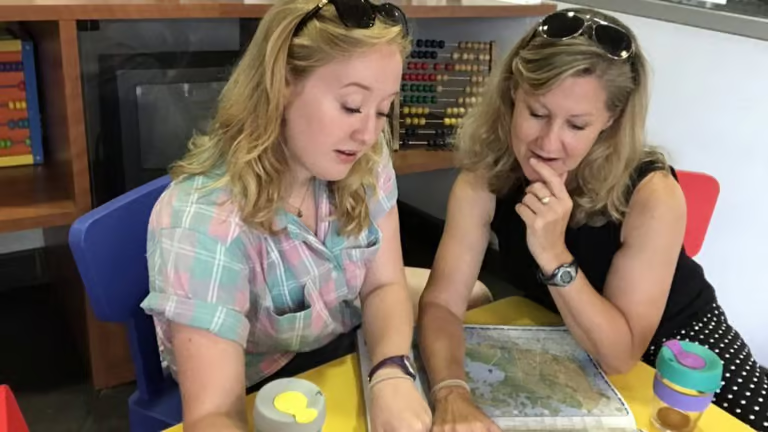
Gerri: Have you done voice work yourself?
Rena: I’ve done a few things here and there, but I also go to work with my mom, and you pick up some things as you go.
Eugenia: So when you went into podcasting, was it easy for you to just sit down and start talking to your mom?
Rena: I guess so. It’s not really different from what we do at home. We just have microphones.
Gerri: And who does the editing?
Veronica (28:47): We have someone else do that — because then we don’t have to sit back and listen to ourselves. We probably would never go on, because you start listening back and going, oh, that was dumb, I want to change this. So we have someone else.
Rena: “I cut a little bit of that word out.”
Gerri: It makes you sound real.
Veronica: I’ve cut her out many times. Rena is a natural at that. She has a natural acting talent anyway. She’s an artist, so that’s her specialty. But she certainly, I mean, as her mother and as a fellow human, I would say…
Rena: My mom has always wanted me to be an actor.
Gerri: And what do you want to do?
Rena (29:20): At the moment, I really enjoy doing art. So I’m a painter and an illustrator. That’s kind of what I’m working on.
Veronica: That’s what Rena went to school for.
Rena: More graphic design, kind of picture-book type stuff. So I can’t do animation.
Gerri (29:37): So you can draw the world, and you both can come up with a story.
Rena (29:41): That’s it.
Veronica (29:42): It’s a whole publishing empire.
Rena (29:45): We’ve got the market cornered.
Working with family
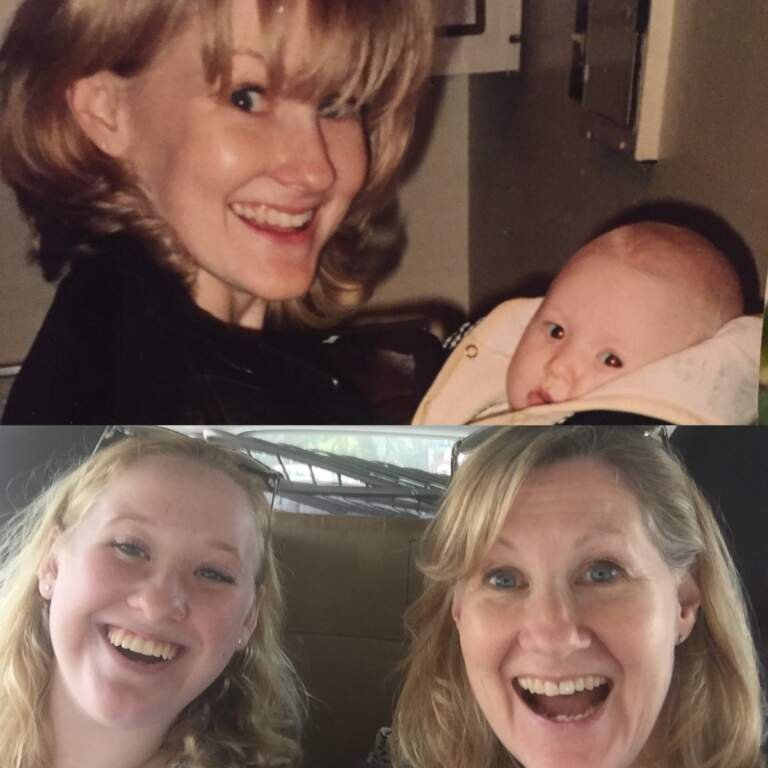
Veronica (29:46): It’s so wonderful that we get to travel together. And I’m very close to my mom, Rena’s close to her grandmother. It’s great to do things with your family, but it’s also great to have your own life and do things.
So part of the problem we have is that we always want to work on stuff, and at the same time it’s, well, if we get going on it, does that mean we can’t do anything else?
Rena (30:10): There’s that fear of success. We like being together, but we also enjoy our own space. So it’s figuring out how to find that balance.
Gerri: So you have a healthy relationship.
Rena: Yeah, I think so.
Veronica (30:21): It’s been really lucky that we’ve been able to travel together and work on things. We have a lot of ideas, so we can always bounce them back and forth. And we do stupid videos, dumb stuff that makes us laugh really hard. I mean, that’s what it’s all about at this point.
Eugenia: So where can we get the podcast?
Rena (30:39): You can stream it anywhere you get your podcasts. It’s called The Trainer’s Guide. On Instagram and Twitter it’s @TheTrainersGuidePod, it has a picture of us holding Poké Balls. But anywhere you get your podcasts, it’s just The Trainer’s Guide.
Veronica (31:00): It’s great. I mean, it’s fun. We have about three episodes left in the first season, and then we’re trying to pop into the second season. But more so, it’s really about getting people to send in.
Eugenia (31:11): Well, you’ve got a lifetime ahead, because you’ve got eight seasons to go.
Veronica: I know, that’s true.
Rena (31:14): And 52 episodes each. It’s a long road.
What stays with me from this one is how mechanical the constraints are. We talk about dub performances as good or bad as if they were simply a matter of talent, when a large part of what you’re hearing is an actor solving a puzzle in real time — hitting a mouth shape that was drawn for a different language, in a line that three people rewrote before it reached her.
It’s the same tension that runs through every adaptation argument in this hobby: what gets lost, what gets rebuilt, and how much of the original survives the journey. Taylor’s answer is that you don’t research your way around it. You learn the muscles.
Listen to The Trainer’s Guide Veronica and Rena’s Pokémon rewatch podcast, available wherever you get your podcasts, and on Instagram and X as @TheTrainersGuidePod.
Listen to Women Talk Sci-Fi Eugenia and Gerri have been interviewing women across sci-fi and fandom for years, with a back catalogue worth digging through.

Thanks to Eugenia and Gerri for letting us republish this interview, and to Supernova for making it happen.







Leave a Comment